Me AND You:
Why Your Needs Still Matter When Caring for Someone with Dementia
You can love someone deeply AND want some time for yourself.
I've been thinking a lot about the word AND lately. It's such a small word, but I think it can make a big difference when we're caring for someone we love.
When you're caring for someone living with dementia, their needs can gradually take over your life. There's so much to do and navigate. Appointments to organise and attend, medications to manage, changes in behaviour to understand and respond to, and decisions to make. Things that were once straightforward become complicated and require new strategies. You may find yourself constantly thinking ahead, anticipating what might happen next.
Somewhere along the way, your own needs can slip further and further down the list. And often, you don't even notice it's happening.
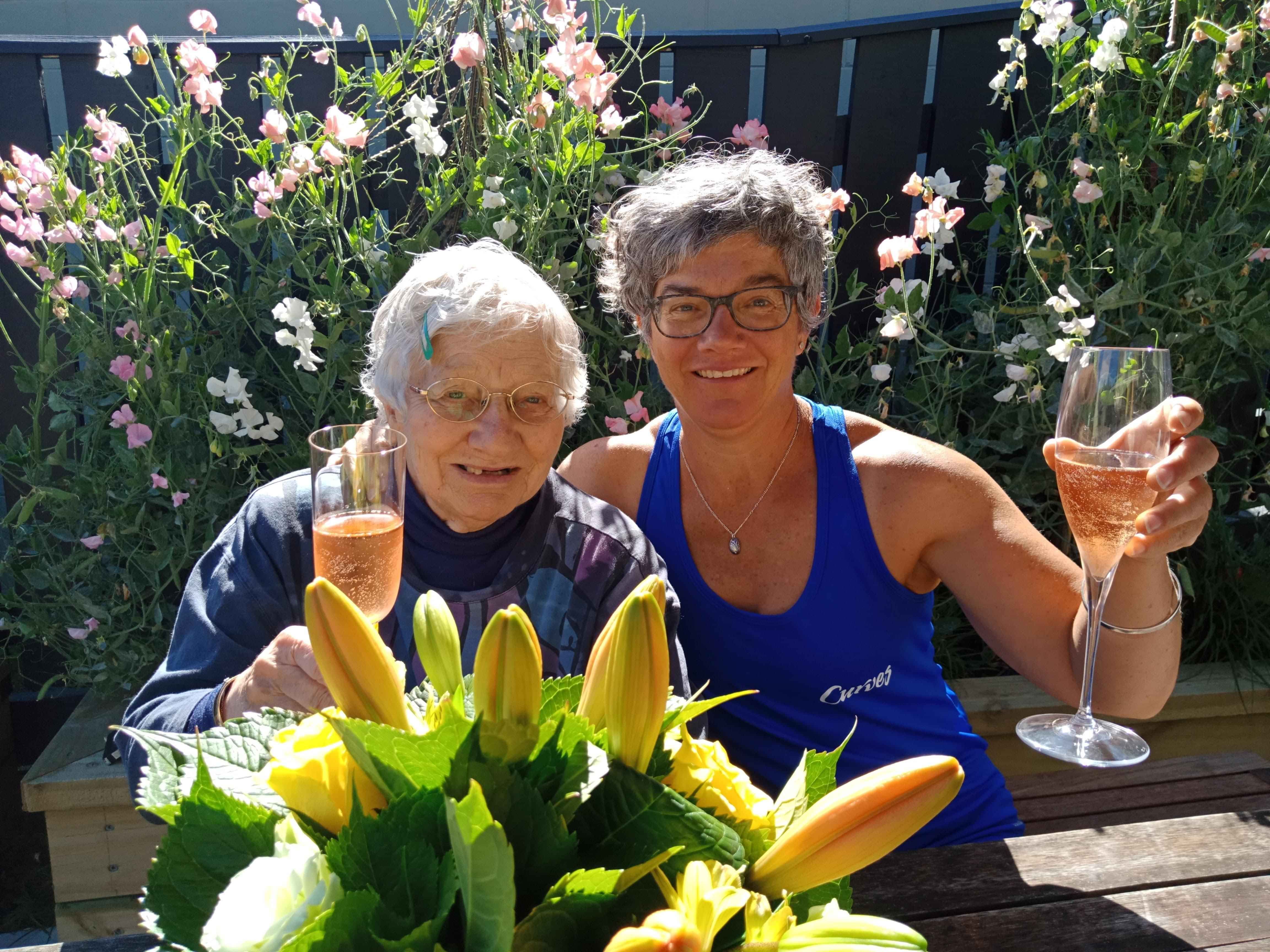
A special moment with Mum
When did your needs become less important?
One of the things I've noticed, both through caring for my mum and through my work with families affected by dementia, is how easily we put ourselves last. And it's understandable; there's only so much time and energy to go around.
When Mum was living in a rest home, I visited her every day. I felt I should be there, and I wanted her to know she hadn't been forgotten, especially as she often felt abandoned. But over time, those daily visits began to feel like a heavy burden. It wasn't that I didn't want to see her or that I loved her any less. It was the constant sense of obligation, of having to fit everything else around visiting.
Eventually, I permitted myself to visit five days a week instead of seven. It might not sound like a big change, but it was significant for me. I had to accept that I couldn't do everything and that taking a couple of days for myself didn't mean I was letting Mum down.
I still loved her. I still cared about her wellbeing. AND I needed some time for myself.
Sometimes our needs get pushed aside because there simply aren't enough hours in the day, or because the person we're caring for needs so much support. But sometimes there's something else going on: a belief that our needs aren't as important.
How can I go out and enjoy myself when my husband is struggling? How can I take a break when Mum needs me? Surely I should be doing more?
And then there's guilt. That familiar feeling that can even turn a well-deserved break into something you struggle to enjoy.
But here's something I'd like you to consider. Your needs don't become less important because someone you love needs more support. You still matter.
It's not ME or YOU. It's ME AND YOU.
We often talk about self-care as something carers need to do so they can keep caring. And that's true. Looking after your own health and wellbeing can help you manage the demands of caring. But I think something is missing from that message. You deserve to look after yourself simply because you're a person with needs, interests and feelings of your own, not just because it will make you a better carer. You might want to go for a walk, meet a friend for coffee, spend time in the garden or simply sit quietly with a book. You don't have to justify those things by explaining how they'll help you care for someone else. They're important because they're important to you.
You can love your person AND look after yourself. The AND is important.
Caring for someone with dementia can bring up conflicting emotions. You can love someone AND feel frustrated with them. You can want to be there for them AND wish you could have a day without responsibilities. Neither feeling cancels out the other.
We don't have to let guilt make our decisions
A psychological approach called Acceptance and Commitment Therapy (ACT), I think, offers a lot to carers.
One central idea is that we can learn to acknowledge uncomfortable thoughts and feelings without letting them control what we do. Rather than constantly trying to get rid of guilt, sadness or frustration, we can recognise those feelings and still make choices based on what matters to us.
When I decided to visit Mum five days a week, I didn't suddenly stop feeling guilty. But I could recognise the guilt without letting it dictate my decision. I knew that being there for Mum mattered to me, AND that having some time for myself mattered too. That's an important distinction. We don't always have to wait until we feel comfortable with a decision before we act on it.
Acceptance doesn't mean liking what's happening or giving up. It means recognising the reality of our situation, including the difficult emotions that come with it, and considering what choices are still available to us. Sometimes we can feel guilty AND still know we're making a reasonable decision.
I also know that saying make time for yourself can feel pretty hollow when you're caring for someone who needs constant supervision or support. Sometimes there genuinely isn't an easy way to take a break. You may not have family nearby, the person you're caring for may resist having someone else help, or you may be so exhausted that organising support feels like yet another job.
I don't want to pretend that looking after yourself is simply a matter of making better choices. Sometimes it means asking for help, exploring respite options or having difficult conversations about what you can realistically manage. And sometimes, all that's possible right now is a few minutes to yourself.
The AND isn't about getting the balance right every day. It's about recognising that your wellbeing deserves a place in the conversation, even when finding that space is difficult.
What about you?
Here's something I'd like you to think about. When was the last time you did something simply because you wanted to? Not because it needed doing or because it would benefit someone else, but because it brought you pleasure, helped you feel connected, or reminded you of who you are beyond your caring role.
Maybe it's something you've stopped doing altogether. If so, is there a way you could begin to make room for it again? It doesn't have to be anything big, and it doesn't have to happen tomorrow. Sometimes the first step is simply acknowledging that it's something you miss, and that it matters, because you are still you. You're a partner, daughter, son, sibling, or friend with your own interests, hopes, needs, and feelings. Caring may be an important part of your life, but it doesn't have to be the whole of who you are.
You matter too.
And perhaps that's what the word AND is really about. Making room for both of you.
If you're caring for someone living with dementia and finding it difficult to make room for your own wellbeing, I offer individual health coaching to help you work through the challenges, explore what's possible, and find practical ways forward.
You're welcome to get in touch for a free, no-obligation 20-minute conversation. Enquire here
Contact Gill